


rspeedy-bundle-size
Helps coding agents analyze and reduce the shipped .lynx.bundle size of Rspeedy and ReactLynx apps. It is a measure-first skill: agents should identify where the bytes live before recommending or applying optimizations.
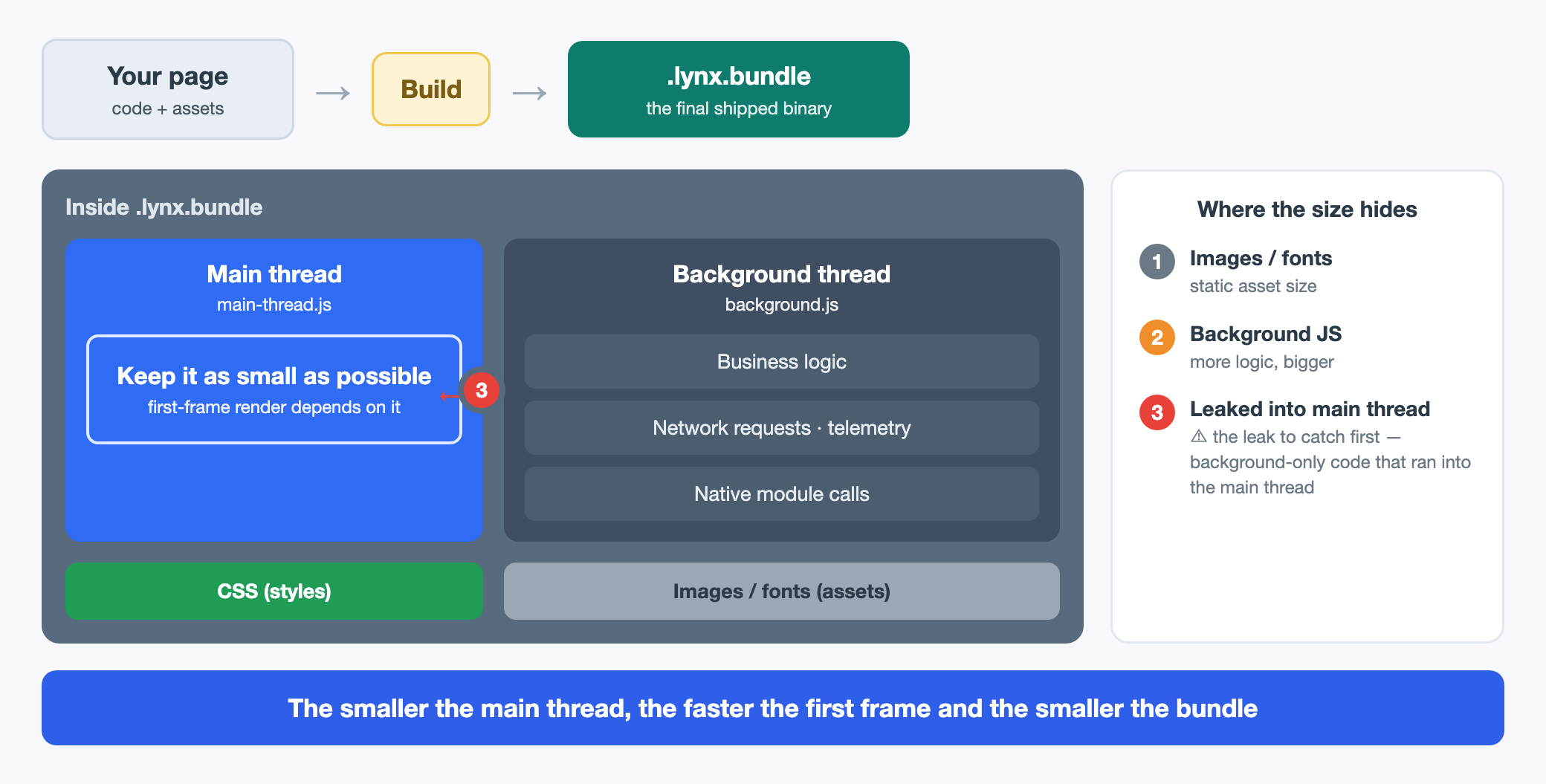
Use it when an agent needs to:
- explain why a Rspeedy or ReactLynx bundle is large
- break bundle size down across media assets, background-thread JavaScript, and main-thread JavaScript
- inspect
rsdoctororstats.jsonoutput before choosing an optimization - reduce main-thread leakage by moving background-only code out of the render path
- evaluate size levers such as media compression, duplicate-package cleanup,
extractStr, lazy bundles, or dynamic component splitting
Installation
This installs the rspeedy-bundle-size skill so compatible coding agents can load its measurement workflow, gotchas, and bundled analysis helpers.
What It Covers
- Measurement discipline — using Rspeedy stats or
rsdoctordata before proposing fixes. - Layer-aware analysis — separating media assets,
react:background, andreact:main-threadweight. - Importer tracing — using real module graph edges instead of guessing why a module is bundled.
- Optimization levers — prioritizing assets, background JS, main-thread leakage, and compile-layer knobs by expected impact.
- Bundle optimization logs — recording before/after
.lynx.bundlesize, build commands, caveats, and shipped changes.
Recommended Workflow
Ask the agent to use rspeedy-bundle-size before changing code for a bundle-size request.
- Read the repository build setup and use the native build command, such as Rush, wrapper tooling, or a package script.
- Generate a real size breakdown with
rsdoctoror Rspeedy stats. - Report the largest lever first, with evidence and tradeoffs.
- Change app code only when requested, and keep every applied optimization backed by a reproducible before/after measurement.