

grid-auto-flow
Introduction
The grid-auto-flow CSS property controls how the auto-placement algorithm works, specifying exactly how auto-placed items get flowed into the grid.
Examples
Syntax
Values
This property may take one of two forms:
a single keyword: one of row, column, or dense.
two keywords: row dense or column dense.
-
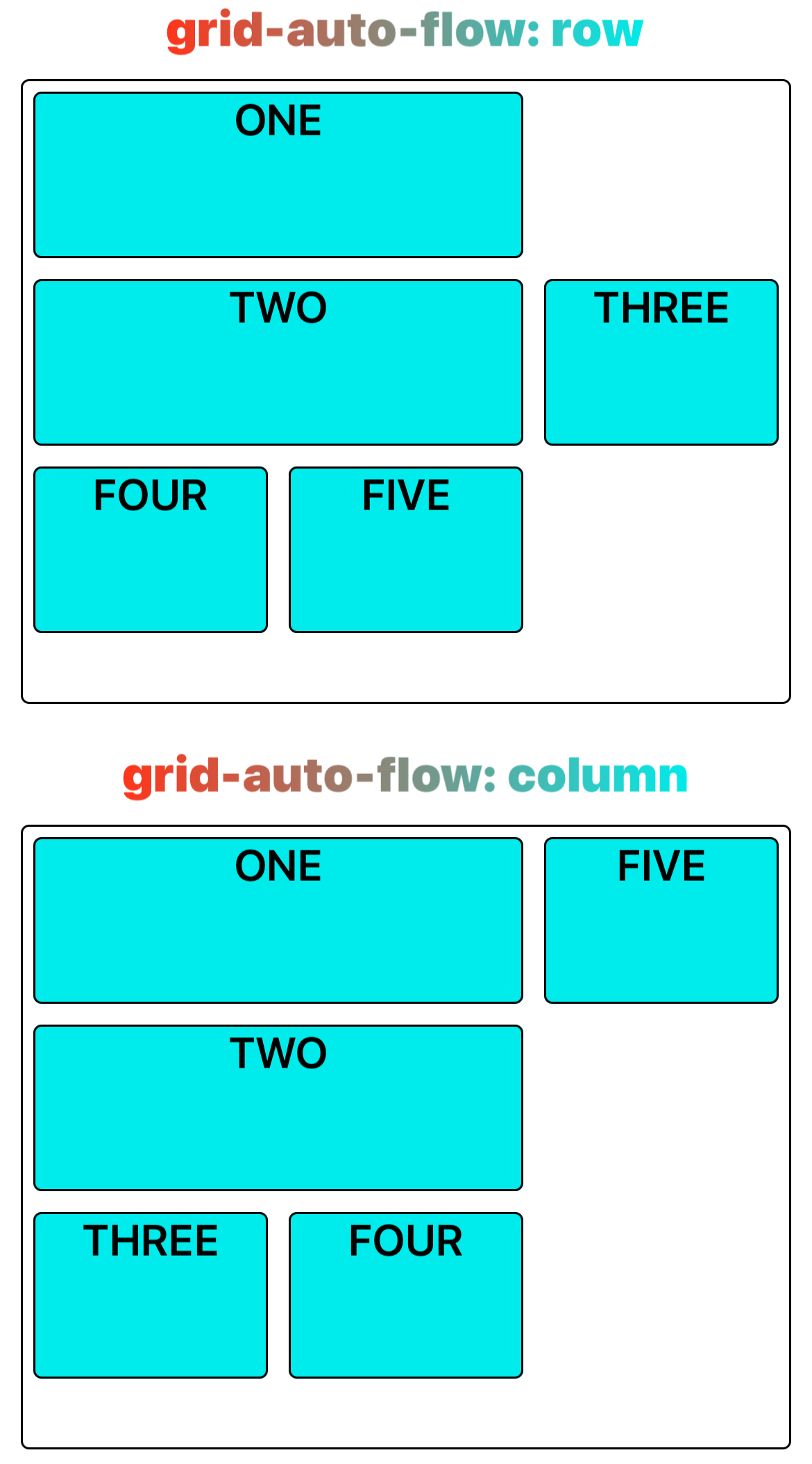
rowDefault value. Items are placed by filling each row in turn, adding new rows as necessary. If neither row nor column is provided, row is assumed.
-
columnItems are placed by filling each column in turn, adding new columns as necessary.
-
dense"dense" packing algorithm attempts to fill in holes earlier in the grid, if smaller items come up later. This may cause items to appear out-of-order, when doing so would fill in holes left by larger items.
If it is omitted, a "sparse" algorithm is used, where the placement algorithm only ever moves "forward" in the grid when placing items, never backtracking to fill holes. This ensures that all of the auto-placed items appear "in order", even if this leaves holes that could have been filled by later items.
Formal definition
| Initial value | row |
| Applies to | grid containers |
| Inherited | no |
| Animatable |
Formal syntax
Compatibility
LCD tables only load in the browser